

Last Updated on July 6, 2026 by Elegance
Cast iron vs wrought iron is a common source of confusion for homeowners. The names sound alike, but the materials are worlds apart.
One is poured into a mould. The other is heated and hammered by hand. That single difference in cast iron vs wrought iron changes strength, cost and lifespan.
Choosing the wrong material for your project can lead to disappointment. A cracked garden ornament is a minor issue. A cracked structural gate is not. Before diving into the comparison, it helps to understand why wrought iron is made the way it is — the forging process is at the heart of every difference covered in this guide.
The Chemistry: What Makes Them Different?
The cast iron vs wrought iron difference starts with carbon. You do not need a science degree to understand it.
- Cast iron. Contains 2 to 4 per cent carbon. This high carbon content makes it easy to melt and pour into moulds.
- Wrought iron. Contains less than 0.08 per cent carbon, plus a small amount of slag. This low carbon content makes it soft and workable by hand.
More carbon means a harder, more brittle metal. Less carbon means a softer, more forgiving one. That trade-off explains almost everything else in this guide. For a deeper look at how wrought iron compares to modern mild steel — which is often sold under the same name — see our article on the difference between wrought iron and steel.

The Manufacturing Process: Moulding vs Forging
This is the most important distinction in the cast iron vs wrought iron debate. How each metal is made shapes what it can do.
Cast Iron: The Moulding Method
Foundries melt raw iron with carbon and other alloys. The molten metal is poured into a pre-shaped mould and left to cool.
- Strength. Great for repetitive, complex shapes made from a single mould.
- Weakness. The cooling process locks in internal stress points, which makes cast iron brittle.
- Speed. Casting is far less labour-intensive than forging, which keeps costs down.
Wrought Iron: The Forging Method
A blacksmith heats the iron, then hammers and shapes it by hand. This cycle repeats several times over.
- Build-up strength. Each heating and hammering cycle strengthens the grain structure.
- Custom wrought iron is genuinely one of a kind, since every piece is worked by hand.
- Forged iron becomes more fibrous and durable with every cycle, unlike cast iron, which is set the moment it cools.
“Wrought iron is highly malleable, allowing it to be heated, and re-heated, and worked into various shapes — wrought iron grows stronger the more it’s worked and is characterized by its fibrous appearance.”— Reliance Foundry, “Ask a Metallurgist: Wrought Iron vs Cast Iron”
Source: reliance-foundry.com — Ask a Metallurgist: Wrought Iron vs Cast Iron
Casting is a one-shot process. Forging is a build-up process. That is the heart of cast iron vs wrought iron. To see the full forging process in action from first design sketch to final installation, our guide on how a custom wrought iron door is made walks through each stage step by step.
Durability and Strength: Which Is Better?
In the cast iron vs wrought iron durability debate, neither material is weak. They are simply strong in different ways.
Wrought Iron
- Ductile. It bends under stress instead of snapping.
- Wrought iron durability comes from its fibrous grain structure, built up through repeated forging.
- Best for structural use. Wrought iron driveway gates, railings and balustrades that face daily impact and stress.
Cast Iron
- Strong under compression. It holds weight well, which is why it suits columns and machine bases.
- Brittle under impact. It can crack or shatter under a heavy knock or a sudden temperature change.
- Wrought iron vs cast iron strength comes down to this: wrought iron flexes, cast iron fractures.

Aesthetics and Customisation
Cast iron vs wrought iron both can look beautiful. They simply achieve it in different ways.
Cast Iron
- Best for identical, repeated patterns — think classic Victorian fence posts.
- Cast iron fencing suits budgets where a mass-produced, intricate look is the priority.
- Limit: every piece from the same mould looks the same. No two-way changes once it is poured.
Wrought Iron
- Best for bespoke, one-of-a-kind, flowing designs that follow your home’s unique lines.
- Wrought iron gates are the gold standard for custom driveway entrances and heritage homes. Browse our wrought iron driveway gate portfolio to see the range of designs possible.
- Flexibility. A blacksmith can adjust the design mid-process. A mould cannot.
If you are deciding between door styles for your Melbourne home, our comparison of modern vs traditional wrought iron doors covers how design flexibility plays out across different architectural periods.
Cast Iron vs Wrought Iron: Summary Comparison
| Factor | Cast Iron | Wrought Iron |
|---|---|---|
| Carbon content | 2 to 4% | Under 0.08%, plus slag |
| Manufacturing method | Moulded (poured) | Forged (heated and hammered) |
| Durability | Strong under compression, brittle on impact | Ductile, bends without breaking |
| Best use cases | Decorative, repeated patterns, machine parts | Gates, railings, structural and custom work |
| Customisation level | Limited to the mould | Unlimited, fully bespoke |
| Typical cost | Lower, less labour-intensive | Higher, reflects hand craftsmanship |
How to Tell Them Apart
Not sure which one you are looking at? These simple checks help.
- Age. Genuine wrought iron mostly predates 1900. Later ornate ironwork is usually cast iron or steel.
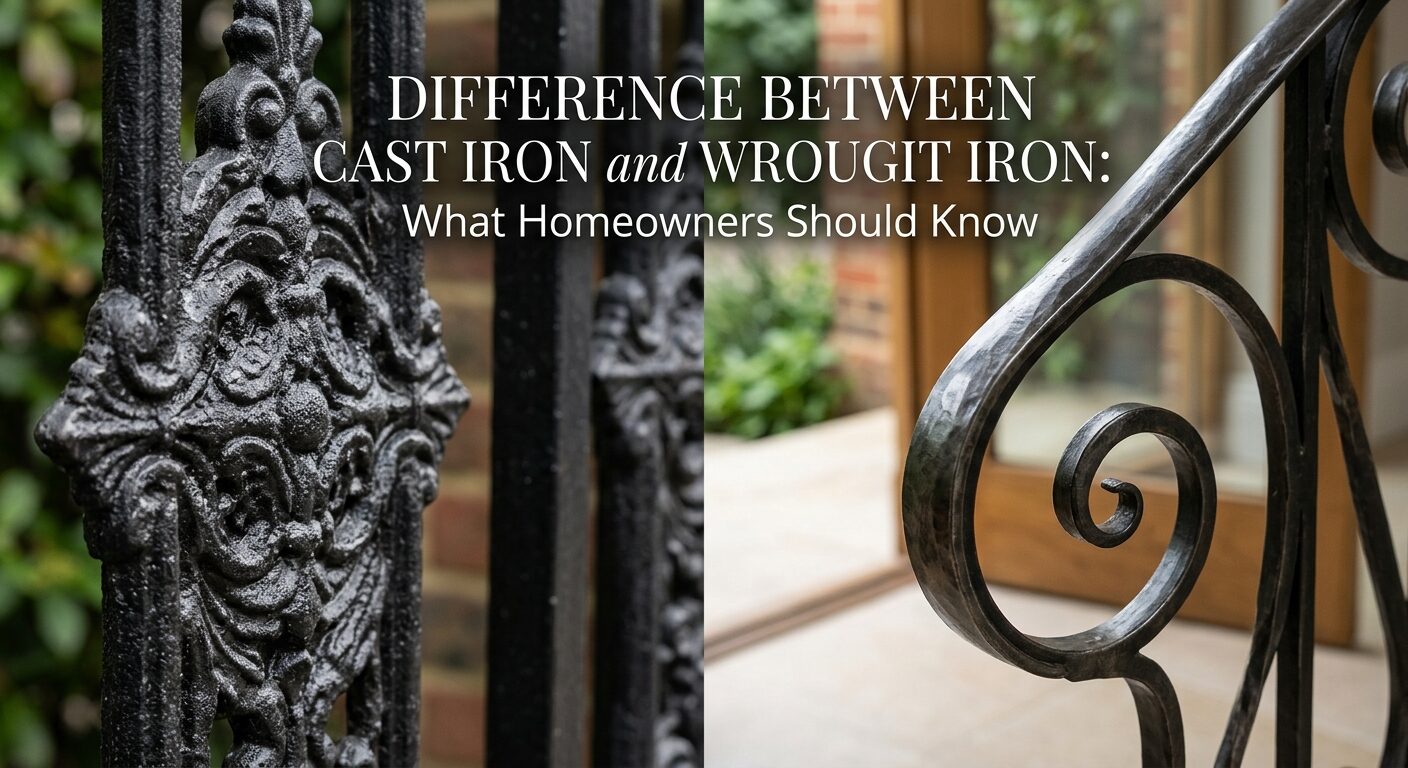
- Surface. Wrought iron often shows slight hammer marks and simple joinery. Cast iron looks perfectly uniform.
- The break test. Wrought iron has a fibrous inner texture. Cast iron shatters cleanly, almost like glass.
- Ask the maker. A genuine forged iron supplier will happily explain their process. Hesitation is a red flag.
This distinction also matters when comparing wrought iron against other metals entirely. Our guide on which is the best metal for windows and doors puts wrought iron, steel and aluminium side by side so you can see exactly where each material leads.

Why Wrought Iron Costs More
Cast iron vs wrought iron pricing is not just about the metal. It is about the labour behind it.
- Cast iron. Poured in bulk from a reusable mould. Lower labour cost, faster turnaround.
- Wrought iron. Hand-forged piece by piece. Every gate or railing takes hours of skilled work.
- Indicative Melbourne pricing. Custom wrought iron gates run $2,500 to $12,000 installed. A mass-produced cast iron alternative runs $800 to $3,000.
A cheaper cast iron piece is not a bad choice. It simply reflects a different process and a different level of customisation. For a full breakdown of what drives wrought iron door pricing in Melbourne, our dedicated wrought iron doors cost guide covers every variable.
Which Should You Choose?
- Choose cast iron if: You want a decorative, budget-friendly piece, like a garden ornament or fence post.
- Choose wrought iron if: You need a structural, long-lasting entrance or railing built to your exact design.
- Still torn? Think about what the piece needs to survive. Daily impact and years of stress call for wrought iron. Our guide on whether wrought iron doors are worth it covers the long-term value case in detail.
A Word of Caution: “Wrought Iron” Is Often Misused
The cast iron vs wrought iron confusion gets worse here. Many products sold as wrought iron today are not genuine forged iron at all. The term has become a catch-all for a look, not a material.
What to watch for: Most “wrought iron” gates sold today are actually mild steel, shaped to look similar. Ask directly whether your piece is hand-forged. A trained fabricator will always explain their process clearly. Our article on what to ask before hiring a wrought iron fabricator lists the exact questions that separate genuine craftspeople from resellers.
This is not a dealbreaker. Quality mild steel, correctly finished, is a fine choice for most homes. Just know what you are actually paying for.
Frequently Asked Questions
What is the main difference between cast iron and wrought iron?
The difference between cast iron and wrought iron comes down to carbon content and manufacturing. Cast iron is poured into a mould. Wrought iron is heated and hand-forged.
Is wrought iron stronger than cast iron?
Wrought iron vs cast iron strength favours wrought iron for anything that faces impact. Wrought iron bends under stress. Cast iron holds weight well but can shatter on impact.
Why are wrought iron gates more expensive than cast iron?
Wrought iron gates are hand-forged, which takes far more skill and labour than casting. Cast iron is poured from a reusable mould, which keeps costs lower but limits customisation.
Can cast iron be repaired if it cracks?
Rarely. Cast iron is brittle and difficult to weld without specialist techniques. Wrought iron and forged iron are far easier to repair, since they can be reheated and reworked.
Is cast iron fencing a good choice for my home?
Cast iron fencing suits homeowners who want an ornate, repeated pattern on a budget. For a custom, structural entrance, wrought iron durability is the better long-term choice.
How do I know if my old ironwork is genuine wrought iron?
Check the age first. Genuine wrought iron mostly predates 1900. Look for slight hammer marks and simple joinery. A specialist can confirm with a simple break test.
Does wrought iron rust more than cast iron?
Both materials rust when bare metal is exposed to moisture and oxygen. The difference is in how each responds to protective coatings. Wrought iron’s fibrous structure holds primers and powder coatings particularly well. For a full breakdown of rust prevention, see our guide on how to maintain a wrought iron door in Melbourne.
Making the Right Choice for Your Project
Cast iron vs wrought iron is not a question of good versus bad. Each material has its place. A decorative garden piece can work well in cast iron. A structural entrance calls for custom wrought iron built to last. Think about what your project needs to survive — and if you would like to talk it through, contact the Elegance In Iron team for honest advice based on your specific home and suburb.


