

Last Updated on July 25, 2026 by Elegance
Installing a driveway gate is more involved than simply hanging a gate between two posts. A proper driveway gate installation includes planning, site checks, fabrication, the physical installation itself, and final testing before anything is handed over.
Knowing what each stage of driveway gate installation actually involves makes the process far less of a mystery, and it helps you ask the right questions along the way.

Initial Consultation and Site Assessment
Every project starts with a proper look at the property, not just a phone estimate.
Driveway width, slope, and existing posts, pillars, or wrought iron fences all get assessed in person. Access needs and, where automation is planned, power access nearby all factor into the conversation too. This stage is what turns a general idea into a workable plan.
Choosing the Right Gate Type
Swing gates, sliding gates, manual gates, and automated gates all suit different properties, and this is usually settled early in the process.
A swing gate installation tends to suit driveways with enough clearance for the gate to open inward or outward.
A sliding gate installation is often the better fit where space is tighter or the driveway slopes, since the gate moves along a track rather than swinging through open space.
Measurements and Design Approval
Accurate measurements matter more than they might seem. A gate built to slightly wrong dimensions can bind, scrape, or simply not close properly.
Once measurements are locked in, final design approval usually follows, covering style, finish, and any decorative details. Confirming this before fabrication begins avoids costly changes later.
For homeowners in Melbourne and across Victoria, driveway gate installation also needs to account for local council considerations, access conditions, and the practical demands of Australian weather. A properly planned gate system should not only look impressive, but also perform reliably year after year.
What Can Delay a Gate Installation?
A few factors can affect the installation timeline, including pending council approvals, unmarked underground services, unsuitable existing posts, uneven ground levels, or delays in electrical preparation for automated systems. Identifying these issues early helps avoid unexpected setbacks once fabrication or installation is underway.
Fabrication and Finish
With the design approved, the gate itself is built to those exact specifications rather than pulled from a generic stock size.
Once fabricated, the gate is finished with a protective coating such as powder coating or a quality exterior paint system. This stage genuinely affects how long the gate lasts, not just how it looks on delivery day.
Why Wrought Iron Gate Installation Requires Extra Planning
Wrought iron driveway gates are significantly heavier than many off-the-shelf alternatives, which means the supporting posts, hinges, track systems, and foundations all need to be planned with that weight in mind. At Elegance in Iron, we assess not only the opening width and slope, but also structural support requirements to ensure the gate operates smoothly and safely over the long term.

Site Preparation
Before installation day, the site itself often needs some work to be ready.
- Posts or pillars, installed new or reinforced if the existing ones are not up to the job.
- Ground levels, checked and corrected where needed, particularly for sliding gates.
- Sliding gate tracks, prepared and set level along their full run.
- Electrical preparation, where automation is planned.
- The installation area, cleared of vehicles, plants, or obstacles so the crew has full access.
For driveway gate installation in Melbourne and across Victoria, underground services need to be marked through Dial Before You Dig before any digging begins, and some councils require a permit for gates near a street boundary.
Both are worth confirming early rather than discovering on installation day.
Gate Installation
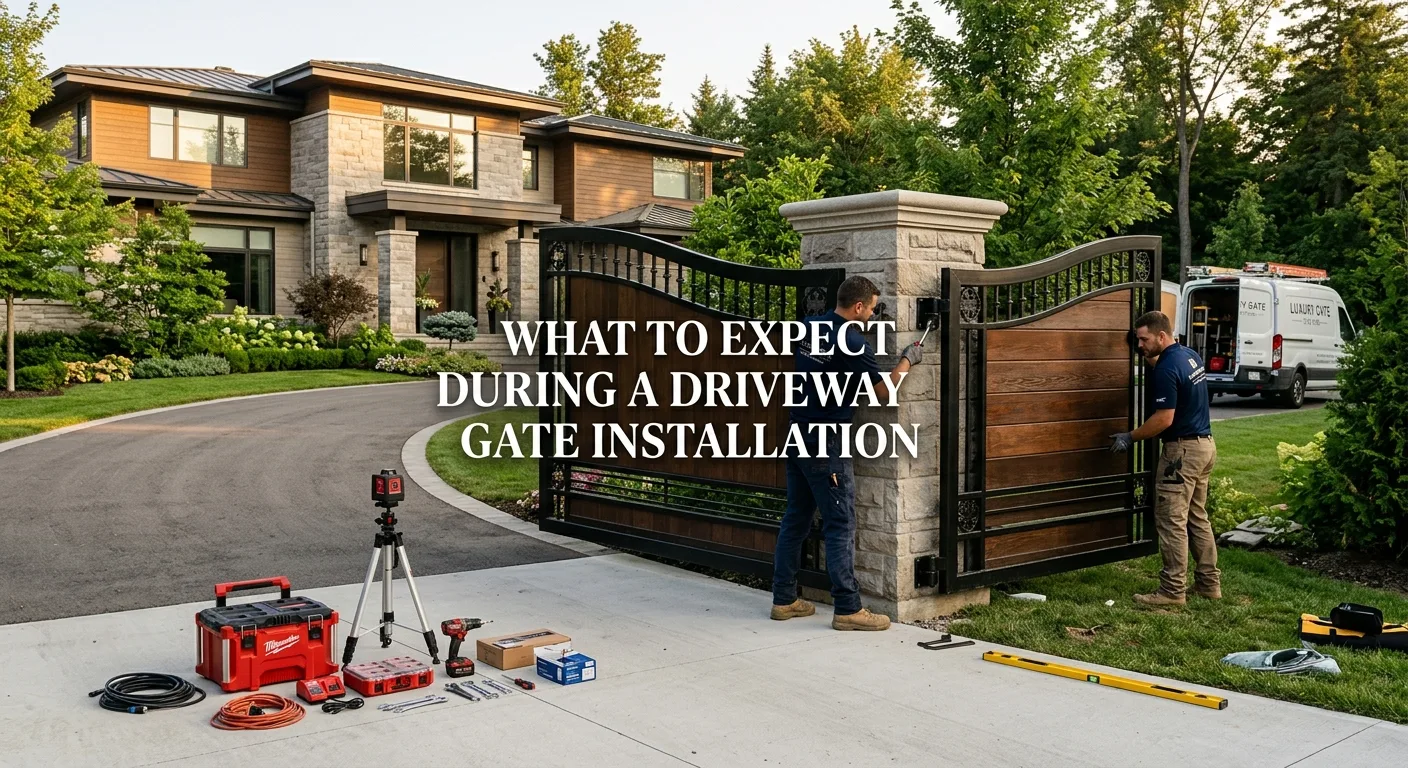
This is the stage most people picture when they think of a driveway gate installation, though a fair amount of it happens before the gate itself goes up.
Posts or supports are positioned first, followed by hanging or mounting the gate and aligning its movement. Hinges, tracks, or rollers are installed and adjusted, and clearance and operation are checked carefully before moving on.
How to Prepare Before Installation Day?
Before your installation team arrives, clear vehicles from the driveway, remove any movable obstacles, and make sure the crew has easy access to the work area. If your gate will be automated, confirm that power access is ready or that electrical preparation has been scheduled in advance. These simple steps help the installation run more efficiently.
Automation and Access Control Setup
For an automated driveway gate, this stage adds motors, remotes, keypads, sensors, and intercoms, depending on what was chosen earlier in the process.
Each component gets tested individually before the whole system is checked together, since automation is where small calibration issues are easiest to catch early and hardest to ignore later.
Final Testing and Handover
Before the job is considered finished, the gate goes through a proper run-through rather than a quick once-over.
Opening and closing are checked, along with locking function and, for automated gates, remote or access control response. Safety checks confirm the gate behaves correctly around obstructions, and basic maintenance advice is usually covered before handover.

A Smoother, Longer-Lasting Result
A professional driveway gate installation is what makes the difference between a gate that works smoothly for years and one that develops problems early.
From the first site assessment through to final testing, each stage exists to catch small issues before they become bigger ones.
Whether it is a custom gate installation, a sliding gate, or a fully automated system, proper process is what makes a gate look right, work right, and last.
Frequently Asked Questions
How long does a typical driveway gate installation take?
This varies depending on the gate type, site conditions, and whether automation is involved, though understanding how long a wrought iron project takes can give you a solid baseline to set your expectations.
Do I need council approval for a new driveway gate?
It depends on your council and where the gate sits relative to the street boundary. This is worth checking early in the process, alongside utility marking through Dial Before You Dig.
What is the difference between swing gate installation and sliding gate installation?
A swing gate installation suits driveways with room for the gate to open inward or outward, while a sliding gate installation works well on tighter or sloped sites since the gate travels along a track.
Can I prepare my property before the installation crew arrives?
Yes. Clearing the installation area of vehicles and obstacles, and confirming access for the crew, both help the day run smoothly.
What happens during final testing?
The gate is checked for smooth opening and closing, correct locking function, and, for automated systems, reliable remote or access control response, along with basic safety checks around obstructions.


