Last Updated on August 4, 2026 by Elegance
In a luxury home, the front door carries more weight than its size suggests — it’s the first material decision a visitor actually touches, and it sets expectations for everything beyond it. A modern iron front door does more than secure the entry; it becomes an architectural feature in its own right, framing the approach and tying the home’s exterior materials together into one considered composition. The ideas below focus on the design language that makes that work: clean lines, material contrast, and scale used deliberately rather than for effect alone. For more inspiration, see our broader roundup of wrought iron front door design ideas for Melbourne.
Why Iron Works in Modern Luxury Design
Iron gives a door genuine structural presence, a weight and solidity that thinner materials simply can’t replicate, and that presence reads immediately even from a distance. It also takes custom detailing exceptionally well, allowing a slim modern frame, a bold pivot mechanism, or subtle geometric patterning without compromising strength. Because iron doesn’t fade or warp the way timber can, a well-finished modern iron front door holds its visual impact for decades rather than needing to be refreshed every few years.

1. Slim-Framed Iron Doors with Large Glass Panels
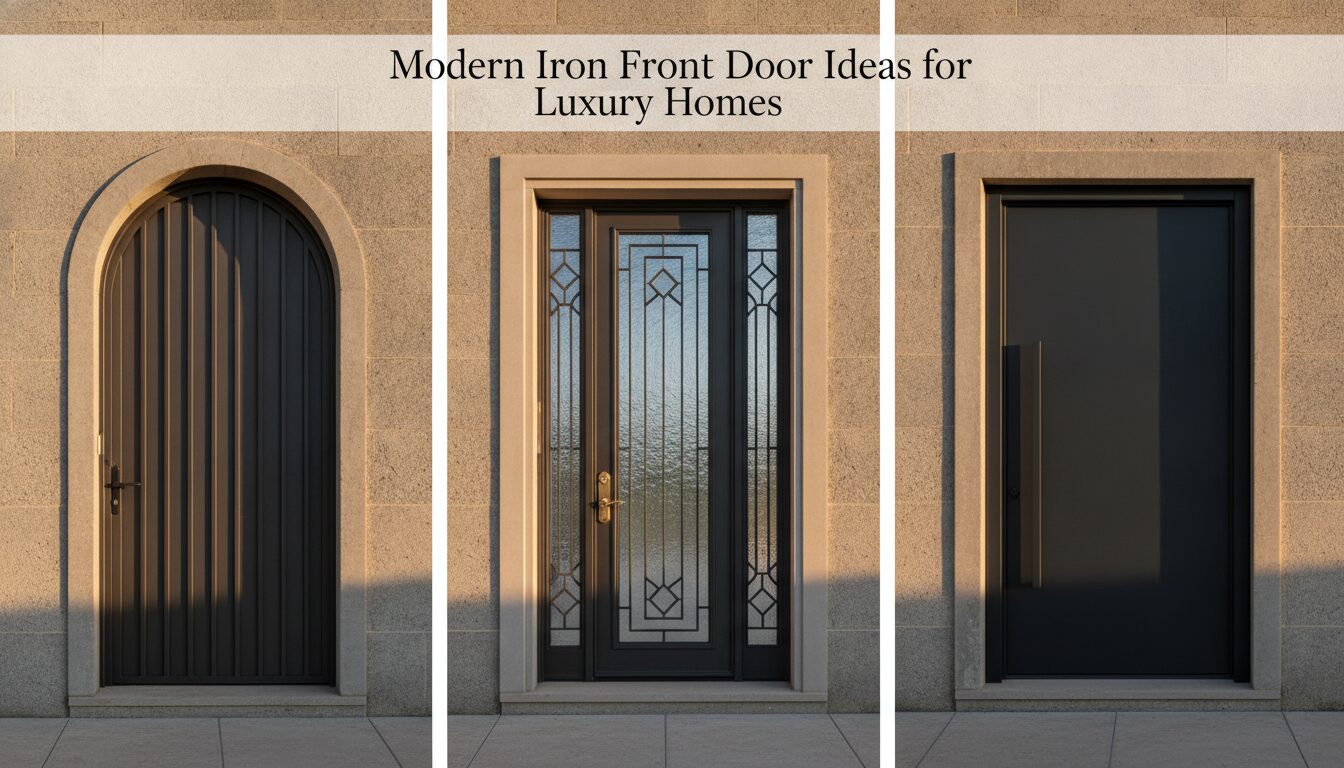
A narrow iron frame built around expansive glass brings genuine openness to an entry, letting the interior and exterior feel connected rather than sealed off from each other. Natural light floods into the foyer in a way a solid door never allows, which matters in homes where the entry doubles as a transitional living space. The frame still does real structural work; it’s simply been pared back to let the glass lead.
2. Oversized Pivot Iron Doors
A pivot door swings from a central axis rather than side hinges, and at a larger scale, that mechanism alone becomes a genuine architectural moment. Oversized proportions read as confident rather than excessive when the surrounding facade has the scale to support them, turning a simple act of entry into something closer to ceremony. This idea works best on homes with generous ceiling heights and an entry sequence built to match. Getting the proportions right often means comparing this against a single vs double entry door configuration before finalising the design.
3. Matte Black Iron Doors for a Minimalist Statement
Restraint can feel just as luxurious as ornamentation, and a matte black finish is proof of that — it reads as considered rather than plain, particularly against a pale render or natural stone facade. The color absorbs light rather than reflecting it, giving the door a quiet density that draws the eye without demanding attention. Keeping hardware minimal reinforces the effect rather than undercutting it. Our comparison of modern vs traditional wrought iron doors covers how finish choices like this shift the overall character of an entry.
4. Iron Doors with Frosted or Textured Glass
Frosted or textured glass panels bring natural light into an entry while keeping the interior screened from the street, which matters more in luxury homes set close to a property line or a public-facing facade. The texture also softens the visual weight of the iron itself, giving the door a more refined presence than clear glass or a solid panel alone.

5. Double Iron Entry Doors for Grand Homes
A double-door entry immediately signals scale, and on a wide facade, it reads as formal symmetry rather than excess. This works best where the portico or entry recess is genuinely proportioned to support two full-height leaves, since an undersized opening can make even well-built doors look forced. Matching glazing and hardware across both leaves keeps the composition feeling unified. See our detailed look at whether double iron doors are worth it for a fuller breakdown of when this configuration makes sense.
6. Warm Metallic or Custom Finishes
Not every luxury entry calls for black. Bronze, charcoal, pewter, and other custom metallic finishes read as more bespoke precisely because they’re less common, giving the door a tailored quality that a standard finish doesn’t quite achieve. These tones tend to suit homes with warmer material palettes, where a stark black door would sit as a harder contrast than the facade calls for. Our overview of how a custom door is made covers how finish and colour choices are developed for each project.
7. Geometric Detailing and Clean-Lined Patterns
Subtle geometric patterning gives a door quiet character without tipping into ornamentation, which suits contemporary homes built around strong architectural lines. The detailing works best when it echoes an element already present elsewhere on the facade — a window mullion pattern, a cladding rhythm — rather than existing as a standalone design choice.
Matching the Door to the Home’s Materials
The strongest modern iron front door designs are chosen in dialogue with the materials already on the facade, not selected in isolation.
| Facade Material | Effect of Pairing with Iron |
|---|---|
| Natural stone | Iron reads as a natural extension of the stone’s weight and texture |
| Timber cladding | Iron provides contrast, sharpening the warmth of the timber |
| Polished concrete | Iron softens the coolness of the concrete with texture and depth |
| Smooth render | Iron adds the texture and shadow line the wall itself lacks |
| Glass facades | A slim iron frame keeps the entry consistent with the rest of the glazing |
Design Considerations Before Choosing a Style
Privacy and natural light are usually in direct tension, so the amount and type of glazing should reflect how exposed the entry actually is, not simply what looks best in isolation. Scale matters enormously — a design that would suit a grand facade can overwhelm a more modest one, and the reverse is just as true. Climate exposure deserves real consideration too; coastal environments in particular call for finishes and hardware rated to resist corrosion, and thermally broken frames are worth considering in more extreme climates to manage heat transfer through the entry.
“Atmospheric corrosivity categories are a standardised rating of the corrosivity”
This is from NATSPEC, the Australian national building specification system used across the architecture and construction industry. The full technote explains that these categories — based on Australian Standard AS 4312 — range from C1 (very low) up to CX (extreme), with coastal and marine environments typically falling into the highest categories due to airborne salt. Selecting hardware and finishes rated for the correct corrosivity category is exactly what determines how well an iron door holds up in a coastal Melbourne suburb versus a sheltered inland one.— NATSPEC, TECHnote DES 010: “Atmospheric Corrosivity Categories” (link verified live)
Architectural context ties all of this together: the right modern iron front door is the one chosen to fit the home, not the one that photographs best in isolation. Our guide to the best metal for windows and doors covers how iron compares with steel and aluminium on durability and climate resistance.
Frequently Asked Questions
Is a modern iron front door too heavy for a luxury entry, or does it suit the style?
Iron generally suits luxury entries well, provided the design, finish, and scale are chosen to match the home rather than applied generically.
Do modern iron doors need to be black to look luxurious?
No. Bronze, charcoal, and other custom finishes can read as equally, if not more, bespoke, particularly on homes with warmer exterior palettes.
Are glass panels in an iron front door a design compromise?
Not typically. Quality glazing maintains the door’s strength while adding light and openness, and frosted or textured options manage privacy without sacrificing that light.
How does an iron front door hold up in extreme climates?
This depends on the specific door; thermally broken frames and corrosion-resistant finishes are worth prioritizing in coastal or temperature-extreme climates. Our guide on whether wrought iron rusts covers durability and maintenance in more detail.
Should a modern iron front door match the home’s other exterior materials exactly?
Not exactly, but it should read as part of the same material conversation, either complementing or deliberately contrasting the surrounding facade rather than ignoring it.
Designing an Entry Worthy of the Home Behind It
A modern iron front door earns its place in a luxury home by doing more than opening and closing well — it frames the entire arrival experience and ties the exterior together into something considered. The strongest designs are chosen to fit the home’s architecture and materials, not selected because they’re trending, which is ultimately what separates a genuinely custom entry from a generic statement piece. Contact Elegance In Iron to start designing a custom iron front door for your home.


