Last Updated on September 24, 2026 by Elegance
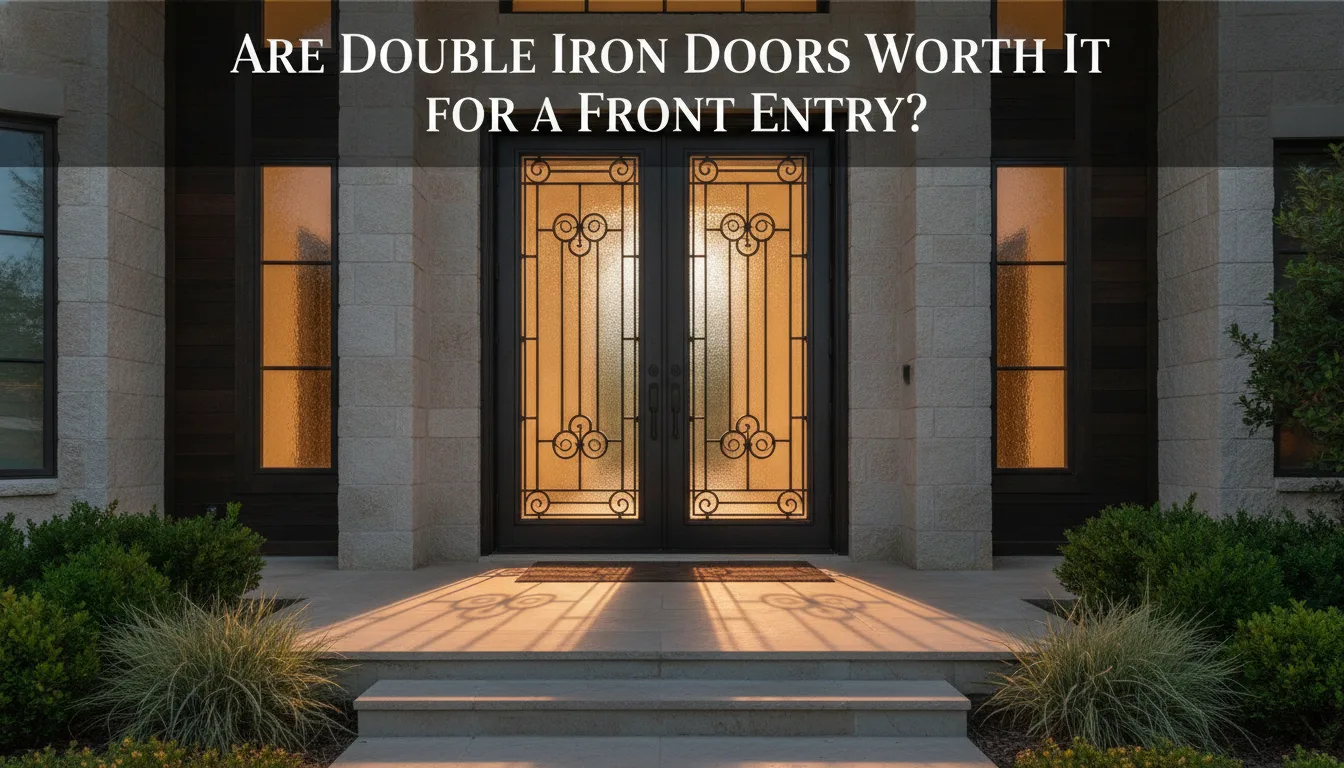
Double iron doors have an undeniable pull — there’s something about a matched pair of full-height iron door panels that reads as instantly grander than a single door ever could. The real question isn’t whether they look impressive; it’s whether that impact actually suits your home, and whether the extra investment translates into something you’ll value day to day. The answer depends less on personal taste than on the scale and architecture already in place.
What Double Iron Doors Offer Visually
Symmetry is the main visual payoff — two matched door panels create a formal, balanced composition that a single door, however well designed, can’t quite replicate. That symmetry reads as scale even before anyone registers the actual dimensions, which is part of why double doors feel so immediately grand. The presence they create tends to set the tone for the whole facade, not just the entry itself. For a broader look at current styles, see our roundup of wrought iron front door design ideas for Melbourne.

Functional Benefits
Beyond appearance, a wider opening noticeably changes how an entry functions day to day. Moving large furniture, artwork, or equipment through this kind of entry is considerably easier than through a standard single opening, which matters more than people expect during a move or a major furniture delivery. For homes that entertain regularly, a wide-open double entry also makes arrivals feel less congested, particularly for larger gatherings where several guests are coming and going at once. The extra clearance also improves accessibility for anyone using a wheelchair, walker, or other mobility aid, since a single door opening can be especially restrictive in a way a wider double entry isn’t. This flexibility tends to matter most in larger homes, where the front entry doubles as a genuine circulation point rather than a rarely used formal threshold.
When Double Doors Make Sense Architecturally
Double iron doors work best where the surrounding architecture has the scale to support them — a wide entry recess, high ceilings, and a facade already built around formal proportions. Grand or luxury-style homes tend to suit this configuration naturally, since the door reinforces a scale the rest of the house has already established. It’s a common misconception that double doors only suit large, modern homes; traditional styles like colonial, farmhouse, or craftsman can work just as well, provided the detailing, whether arched and decorative or slim and geometric, matches the home’s existing character. Where the entry opening itself is generous, double doors read as proportionate rather than oversized. Our comparison of modern vs traditional wrought iron doors covers how detailing shifts between these styles.

When a Single Iron Door May Be Better
Smaller homes and narrower entries are usually better served by a single door, since a two-panel configuration can overwhelm an opening that wasn’t designed for that scale. Minimalist facades, in particular, often suit a single door’s cleaner, more restrained footprint better than the added visual weight of a matched pair. A well-proportioned single iron door can deliver nearly the same presence as its larger counterpart without the same demands on space, and it’s often easier to detail well precisely because there’s only one panel to get right rather than two that need to align. High-quality double iron doors should include adjustable hinges and a multi-point locking system to help maintain that alignment and keep both panels operating smoothly over time. Our detailed comparison of single vs double entry doors goes through this trade-off in more depth.
Things to Consider Before Choosing Them
Budget is the obvious starting point, since double doors involve more material, more hardware, and more installation complexity than a single door. Privacy and glazing configuration matter too — more glass surface across two panels means more to consider in terms of what’s visible from the street. Hardware selection affects both function and appearance at this scale, and installation quality matters more with double doors specifically, since proper alignment between the two panels is what keeps the entry operating smoothly over time. Our guide on mistakes to avoid when buying a wrought iron door covers several of these decision points in detail.
Double Iron Doors vs. Single Iron Doors
| Factor | Double Doors | Single Door |
|---|---|---|
| Visual scale | Grand, formal, symmetrical | More restrained, still substantial |
| Best suited to | Wide, high facades with a generous entry recess | Modest to mid-size entries, minimalist facades |
| Functional width | Wider opening, easier for large furniture | Standard opening, sufficient for most daily use |
| Upfront cost | Generally higher | Generally lower |
| Maintenance | More hardware and hinge points to maintain | Simpler, fewer components |
Cost vs. Long-Term Value
Double iron doors cost more than a single door, and that’s true regardless of design or finish. The gap between the two is often smaller than homeowners initially expect, though it still varies considerably depending on size, glazing, and finish, so it’s worth getting an actual comparison rather than assuming the difference is prohibitive. What that additional cost buys, when the design and proportions are right, is curb appeal, a stronger first impression, and everyday usability that a single door can’t match in the right setting. The value isn’t really about the doors as objects — it’s about how well they’re matched to the home they’re installed on. Our broader piece on whether wrought iron doors are worth it covers this value question more generally.
“thermal breaks are materials with an R-value greater than or equal to R0.2”
This is from the NatHERS (Nationwide House Energy Rating Scheme) Assessor Handbook, the official Australian government reference for residential energy rating. The handbook explains this is the minimum standard set by the National Construction Code (NCC) 2022 for materials installed between external cladding and a metal frame to interrupt the transfer of heat or cold — directly relevant to the FAQ below about whether double iron doors affect a home’s energy efficiency. A door or window frame without an adequate thermal break creates what the handbook calls a thermal bridge, which can increase heating and cooling costs and, in some cases, cause condensation on interior surfaces.— NatHERS (Nationwide House Energy Rating Scheme), Assessor Handbook, Chapter 11: Thermal Bridging (link verified live)
Why Custom Design Matters
A generic, oversized double door dropped into an entry that wasn’t designed for it rarely looks intentional, no matter how well the doors themselves are made. Proportion, detailing, and hardware all need to be considered together, tailored to the specific entry rather than treated as an off-the-shelf upgrade. This is where the real difference between an entry that feels excessive and one that feels truly elevated tends to show up. A custom approach also accounts for details a standard configuration can’t, such as how the glazing pattern lines up across both panels or how the hardware sits relative to the surrounding trim. Our overview of how a custom door is made walks through this process in more detail.
Frequently Asked Questions
Are double iron doors more expensive than a single door?
Yes, generally, since they involve more material, hardware, and installation complexity, though the actual cost difference depends on size, glazing, and finish.
Does a double configuration make a small entry look bigger?
Not usually. Two full-height panels in a particularly small entry tend to look oversized rather than spacious, whereas a well-proportioned single door often suits a smaller space better.
Is there more upkeep with two doors instead of one?
There’s somewhat more to maintain, simply because there are more hinges, hardware points, and surface area involved, though the difference is generally manageable with normal upkeep.
Can this style work on a modern minimalist home?
It can, provided the proportions and detailing stay restrained; an ornate or heavy design tends to work against a minimalist facade regardless of the material.
Is a single iron door just as secure as a double configuration?
Security depends more on construction quality, locking hardware, and installation than on whether the entry has one panel or two.
Do double iron doors affect energy efficiency?
It depends on the specific door. An insulated core, quality weather seals, and, where available, a thermal break in the frame affect heat transfer more than the material itself, so it’s worth checking these details alongside glazing quality rather than assuming iron alone dictates efficiency. Our guide to the best metal for windows and doors covers this comparison in more depth.
Deciding If Double Iron Doors Are Right for Your Home
Double iron doors are truly worth it in the right setting — a home with the scale, proportions, and architectural formality to support them — and clearly unnecessary in the wrong one. The decision comes down less to how impressive double doors look in isolation and more to how well they’d actually fit the home in question. Contact Elegance In Iron to discuss whether a custom double or single iron door suits your entry.


I’m renovating my home entrance and considering double iron doors instead of a standard single door. For Melbourne homes, are there specific entryway measurements or structural factors I should check before choosing double doors, especially regarding weight, hardware and long-term alignment?