
Last Updated on June 9, 2026 by Elegance
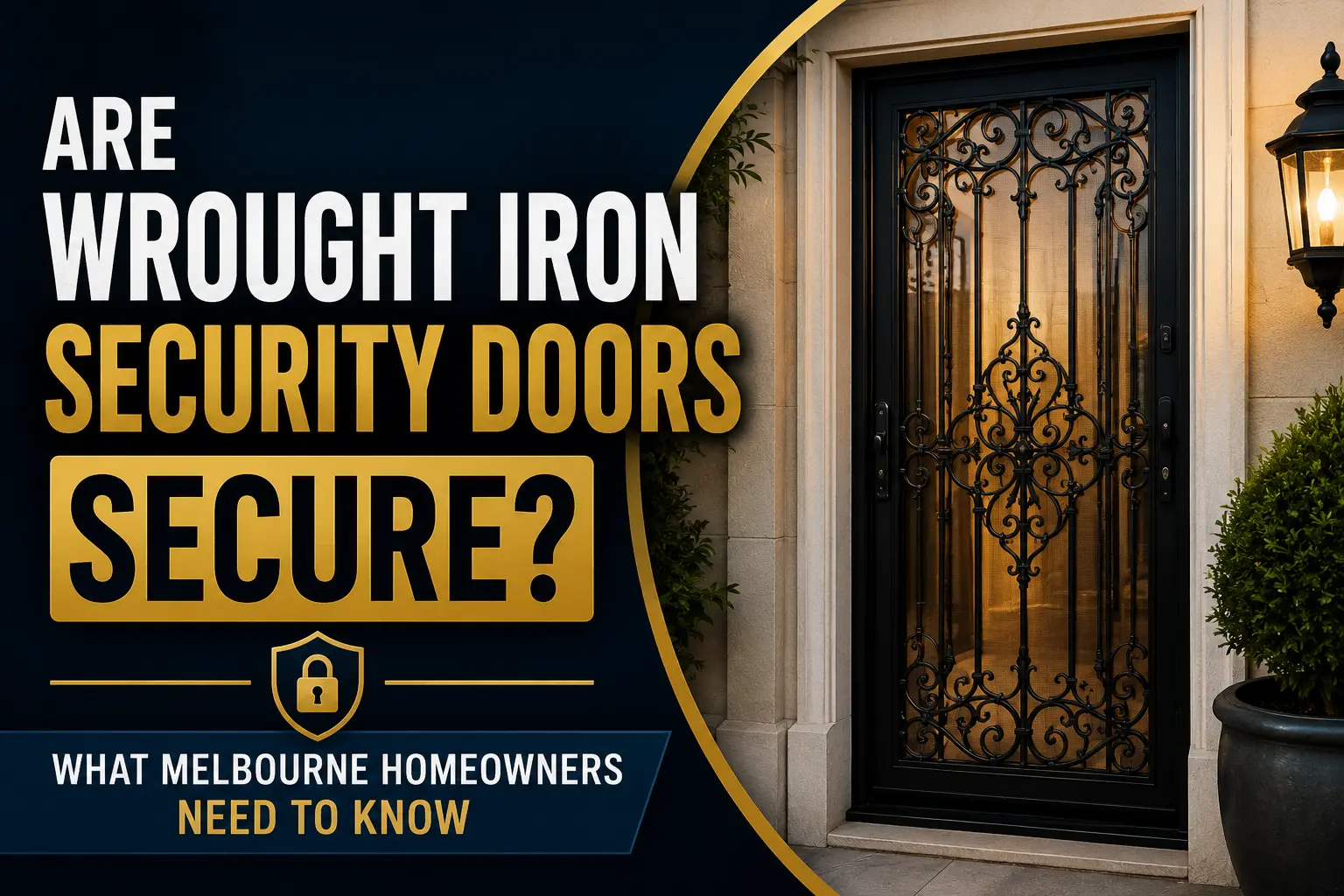
Are wrought iron security doors secure? Yes, they can be genuinely secure, but only when they are built as proper security doors, tested to the AS5039 security door standard and installed correctly. A wrought iron door should not be judged only by its weight or decorative appearance. The real level of protection depends on the frame, lock, hinges, grille design, mesh, fixing points, coating and installation quality. For Melbourne homeowners, this is especially important because the door needs to resist forced entry as well as local weather conditions, including salt air in coastal suburbs.
| User Question / Need | Short Answer | Practical Explanation |
| Are wrought iron security doors secure? | Yes, if tested and installed properly | A secure wrought iron door must work as a full system, not just a heavy iron panel. |
| Is every wrought iron door a security door? | No | Some doors are decorative and may not meet AS5039 or provide real break in resistance. |
| What should buyers check first? | AS5039 compliance | Ask whether the full door system has been tested, including lock, hinges, frame and mesh. |
| Do locks and hinges matter? | Yes, a lot | A strong door can still fail if the lock side or hinge side is weak. |
| Is this suitable for Melbourne homes? | Yes, with the right finish | Coastal suburbs need strong powder coating and rust protection because of salt air. |
| What is the goal of this article? | To explain real security clearly | The article helps homeowners understand whether a wrought iron door is genuinely secure or only looks secure. |
The Short Answer: Yes, But It Depends on the Door
Are wrought iron security doors secure? Yes, they can be secure, but only when they are designed, tested and installed as proper security doors. A heavy iron door may look tough from the street, but real protection depends on more than weight and appearance.
A quality wrought iron security door can improve front entry protection, slow down forced entry and create a strong visible barrier. This can be useful for Melbourne homeowners who want both safety and street appeal. But a decorative iron door without proper locks, reinforced hinges, strong fixing points and tested construction may not perform well during a real break in attempt.

What Makes a Security Door Actually Secure?
A secure door works as one complete system. The iron frame, grille, mesh, locks, hinges, screws, strike plate and installation all need to work together. If one part is weak, the whole door becomes easier to attack.
For example, strong iron bars will not help much if the lock side can be forced open with a crowbar. A heavy frame is also not enough if the hinges are exposed or poorly fixed. Good iron door break in resistance comes from the full construction of the door, not just the metal used.
Australian Standard AS5039 Explained
AS5039 security door standard is the Australian benchmark used to test whether a door can perform as a real security door. AS5039 explained in simple terms means the door must pass tests that copy common break in methods.
This standard helps buyers avoid vague marketing claims. If a supplier says a door is secure, ask whether it has been tested to the relevant security door australia standard. A tested door gives you more confidence than a door that is only described as “strong” or “heavy duty”.

The 6 Tests Every Compliant Door Must Pass
A compliant security door must pass several physical tests. These tests are designed to check how the door responds to impact, levering, pulling, cutting, probing and weather exposure.
The main AS5039 tests include:
- Impact Test
- Jemmy Test
- Pull Test
- Probe Test
- Knife Shear Test
- Corrosion Test
Together, these tests show whether the door can protect the entry point under pressure. This is especially important for front doors, side entries and rear access points.
Impact Test
The impact test checks whether the door can handle force from kicking, pushing or shoulder charging. Many break in attempts are direct and forceful, so this test is important.
A proper wrought iron security door should stay in place after impact. The grille, mesh or bars should not pop out of the frame, and the door should not create a large opening. This test shows whether the structure is strong enough to resist sudden pressure.
Jemmy Test
The jemmy test checks whether the door can resist levering with tools such as a screwdriver or crowbar. This type of attack usually targets the lock side, hinge side or frame gap.
For wrought iron doors, this test is very important. A door may look solid in the centre but still fail if the edge can be pried open. Reinforced lock areas, strong strike plates and secure hinge fixing help reduce this weakness.
Pull Test
The pull test checks whether parts of the screen, bars or mesh can be pulled away from the frame. If an intruder can grab part of the door and bend or remove it, the door may fail as a security barrier.
Decorative ironwork should be strongly welded and properly fixed. Scrolls, bars and panels should not be attached only for appearance. On a secure door, the decorative design still needs to support strength and resistance.
Probe Test
The probe test checks whether someone can reach through the door and access the handle, lock or internal latch. This matters when a wrought iron door has large decorative gaps.
A secure wrought iron door should prevent easy reach through access, especially around the locking area. If the design has open patterns, it may need tested security mesh or a safer grille layout behind the ironwork.
Knife Shear Test
The knife shear test applies mainly to mesh sections. It checks whether the mesh can resist cutting with a blade or sharp tool.
This is important because basic flyscreen mesh is not security mesh. If the door includes mesh for airflow and insect protection, make sure it is proper tested security mesh. A strong iron frame with weak mesh is not enough for real protection.
Corrosion Test
The corrosion test checks whether the door can handle moisture, weather and salt exposure. This is very relevant in Melbourne, especially near coastal suburbs such as Brighton, St Kilda, Sandringham, Williamstown and Port Melbourne.
Poor coating can lead to rust over time. Rust can weaken welds, hinges, screws and locking areas. A good wrought iron door should have quality powder coating, proper surface preparation and regular maintenance to keep it secure for years.
Lock and Hinge Requirements
Locks and hinges are just as important as the iron itself. A secure door needs a strong locking system, a solid strike plate and hinges that cannot be easily attacked.
When comparing wrought iron doors, check these details carefully:
- AS5039 compliance or clear testing information
- Strong lock and reinforced lock area
- Protected or secure hinge fixing
- Tight installation into the existing frame
- Suitable finish for Melbourne weather and coastal air
A door with poor hardware may look strong but still be easy to force open. Security should always be checked as a complete package.

Do Wrought Iron Doors Meet AS5039?
Some wrought iron doors meet AS5039, but many decorative iron doors do not. The material alone does not decide compliance. The door must be tested as a full system.
A custom wrought iron door can be made to a high security level if the manufacturer designs it correctly. But if the door is mainly sold as decorative, heritage style or architectural, you should ask for proof before treating it as a security product.
What to Check When Buying a Wrought Iron Security Door
Before buying, ask direct questions. Does the door meet AS5039? Has the full door system been tested? What lock is used? Are the hinges protected? How is the door fixed into the frame?
Also check the design. Large gaps may reduce security if someone can reach through them. For Melbourne homes, also ask about powder coating, rust protection and maintenance, especially if you live close to the bay.
What Happens If a Door Is Not AS5039 Compliant?
A non compliant door may still add privacy, visual deterrence and some physical barrier value. It may be better than having no extra front door protection at all.
But it should not be treated as a tested security door. Its break in resistance is uncertain, and it may fail against impact, levering or reach through attacks. If security is your main reason for buying, choose a compliant door instead of relying only on looks.
Frequently Asked Questions
Are wrought iron security doors secure?
Are wrought iron security doors secure? Yes, if they are built as real security doors and tested properly. Decorative iron doors may look strong, but they may not provide the same protection.
Is AS5039 important?
Yes. AS5039 helps show whether a door has passed physical security tests. It gives buyers a clearer way to judge security claims.
Are decorative wrought iron doors security doors?
Not always. A decorative door can be strong, but it is not automatically a certified security door. Always ask for test results or compliance details.
Are wrought iron doors good for Melbourne homes?
Yes, they can suit Melbourne homes very well. They are popular for classic, heritage and high end entrances. In coastal suburbs, choose corrosion resistant coating to reduce rust risk.
Conclusion
Are wrought iron security doors secure? They can be very secure when they are properly designed, tested and installed. The safest option is a door that meets AS5039 security door standard and includes quality locks, strong hinges, reinforced framing and durable coating.
A wrought iron door can offer both protection and style, but buyers should not rely on appearance alone. Ask for proof of testing, check the hardware and make sure the door is installed by someone who understands real security.


