Last Updated on October 18, 2026 by Elegance
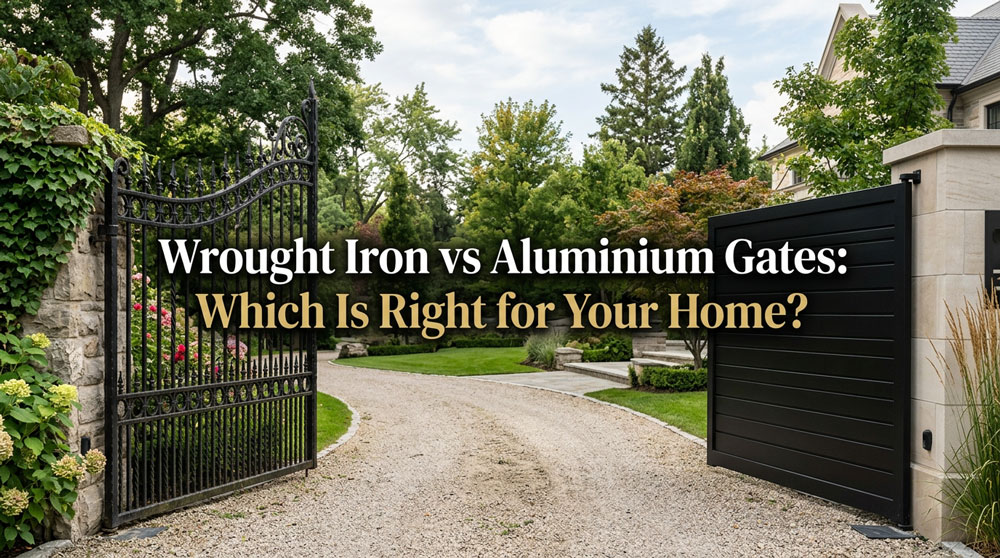
Choosing between wrought iron and aluminium gates depends on the design you want, your site conditions and the maintenance you are prepared to undertake. Compare the proposed gate construction, protective finish, hardware and installation requirements alongside the material itself.
Before comparing quotes, confirm what each supplier means by “wrought iron”. Our guide to the difference between wrought iron and steel explains the distinction. Ask each supplier to identify the material and finish in writing so you can compare equivalent specifications.
Wrought Iron vs Aluminium Gates at a Glance
| Factor | Wrought Iron / Decorative Steel Gates | Aluminium Gates |
|---|---|---|
| Material specification | Confirm whether the quote specifies traditional wrought iron or decorative steel. | Confirm the alloy, section sizes and gate construction. |
| Weight and supports | Check the finished gate weight when specifying posts, hinges and foundations. | Often lighter than a comparable steel design; supports still need to suit the finished gate. |
| Corrosion and finish | Ask about corrosion protection, coating preparation and maintenance requirements. | Does not develop iron rust, but corrosion and coating deterioration remain possible. |
| Maintenance | Inspect the finish and hardware; address coating damage according to the supplier’s instructions. | Clean and inspect the finish and hardware according to the supplier’s instructions, particularly in coastal conditions. |
| Design options | Can suit decorative, heritage-inspired or contemporary designs, depending on fabrication. | Available in slat, picket and other fabricated designs; detail depends on the supplier. |
| Security | Assess the complete installation, including infill, locks, hinges, posts and fixings. | Assess the same components; material alone does not establish a security rating. |
| Automation | Select the operator for the gate’s weight, dimensions, wind exposure, geometry and expected use. | Apply the same selection criteria; a lighter gate does not automatically suit every motor. |
| Installed cost | Request an itemised quote covering fabrication, finish, hardware, site work and automation. | Compare an equivalent specification with the same inclusions. |
| Service life | Depends on construction, exposure, protective finish, maintenance and component condition. | Depends on construction, exposure, finish, maintenance and component condition. |

The Two Materials: Strengths and Trade-Offs
Wrought Iron and Decorative Steel Gates
“Wrought iron” describes a traditional material, but the term is also used commercially for decorative steel gates. Confirm the actual material, fabrication method and protective finish before comparing products.
This style can suit homeowners who want decorative metalwork, heritage-inspired details or a custom entrance design. Assess the proposed gate as a complete installation: its construction, finish, posts, hinges, locks and any automation must suit the opening and site conditions.
What to check before ordering:
- The material specified in the written quote.
- The proposed corrosion-protection and coating system.
- The finished gate weight and supporting hardware.
- Maintenance instructions and the scope of any written warranty.
Aluminium Gates
Aluminium is another option for residential gates, with designs ranging from slats and pickets to decorative fabricated panels. Compare the proposed construction and finish alongside the appearance.
For coastal or exposed sites, ask the supplier how the specified finish, fixings and hardware suit the environment. Aluminium does not develop iron rust, but this does not make the complete gate immune to corrosion, coating damage or maintenance needs.
What to check before ordering:
- The alloy, section sizes and frame construction.
- The finish and its suitability for the site’s exposure.
- The hinges, locks, fixings and compatibility of different metals.
- Cleaning, inspection and automation requirements.
Six Key Comparisons

1. Durability and Lifespan
Neither material has a fixed service life that applies to every gate. For wrought iron or decorative steel gates, durability depends on the construction, corrosion protection, site exposure and ongoing maintenance. Aluminium does not develop iron rust, but its finish, joints and hardware still need inspection and care. Compare the specified construction and maintenance requirements rather than relying on a universal lifespan estimate. For a full picture of how longevity is built into an iron gate from the fabrication stage, see our guide on how long wrought iron gates last.
2. Maintenance
Both gate types need routine cleaning and inspection. For wrought iron or decorative steel gates, check for coating damage and signs of corrosion, particularly around joints, welds and fixings. Follow the finish supplier’s instructions for repairs and recoating rather than assuming a fixed repainting interval. For aluminium gates, clean the coated surfaces as instructed and inspect the finish, joints and hardware. Coastal exposure may require more frequent cleaning. For either material, maintain hinges, locks and automation components according to their manufacturers’ instructions.
3. Security and Strength
Material alone does not establish how secure a gate will be. Compare the complete design, including frame and infill construction, gaps, locks, hinges, posts and fixings. A heavier gate is not automatically more secure, and an aluminium gate should not be dismissed solely because it is lighter. If security is a priority, ask the supplier for evidence supporting any performance claims about the specific gate and installation being quoted.
4. Style and Street Appeal
Both materials offer design options beyond a single architectural style. Decorative iron or steel gates can suit heritage-inspired detailing or simpler contemporary designs, while aluminium gates are available in slat, picket and other fabricated styles. Compare the proposed proportions, spacing, colour and detailing against your home’s façade and fencing. Ask to see completed examples that resemble the design you want. Browse our gallery of wrought iron driveway gate designs to see the range of styles achievable in iron that aluminium simply cannot replicate.
5. Cost and Long-Term Value
Compare itemised quotes for equivalent gate designs rather than assuming one material will always cost less. Gate dimensions, fabrication detail, finish, hardware, site preparation and automation can all affect the installed price. For long-term budgeting, also consider the specified cleaning, coating maintenance and component servicing requirements. Do not assume that a higher purchase price guarantees a particular increase in property value.. For a full cost breakdown, our guide to wrought iron gate costs in Melbourne covers every variable including site conditions and automation.

6. Gate Automation Compatibility
Both gate types can be automated when the gate and operator are suitably specified. Motor selection depends on more than material or weight: gate dimensions, wind exposure, opening geometry, operating frequency and the manufacturer’s limits also matter. Ask the installer to confirm compatibility with the proposed gate, supporting structure and required safety devices. Neither material automatically requires a commercial-grade motor or guarantees faster operation, lower power use or longer motor life.
. Our detailed guide to gate automation costs in Melbourne breaks down the full specification for both material types.
A Quick Decision Guide
Consider Wrought Iron or Decorative Steel If…
- You want decorative metalwork or detailing that the supplier can demonstrate in completed projects.
- The proposed design complements your home’s architecture, fencing and entrance.
- You are comfortable with the specified coating inspections, repairs and maintenance.
- The quote includes supports, hardware and automation suited to the finished gate.
Consider Aluminium If…
- You prefer an aluminium design available from the supplier.
- A lighter gate is useful for your project, subject to confirmation of the finished weight.
- The proposed finish and hardware suit your site’s exposure, including coastal conditions where relevant.
- Its itemised quote and maintenance requirements suit your budget.
Before Choosing Either Material
Compare equivalent designs and inclusions. Confirm the actual material, finish, hardware, site work and automation specification in writing. For coastal, sloping or exposed sites, ask how the proposed installation addresses those conditions rather than choosing by material alone.
Real-World Examples: Which Material Wins Where?
Two common Melbourne scenarios show how the wrought iron vs aluminium gates decision plays out in practice.
Coastal Home
Brighton, Elwood or Mornington
The challenge: Salt air attacks coated iron at every chip and weld.
The right choice: Aluminium driveway gates with marine-grade powder coating and stainless hardware.
Why: Recoating iron every few years in a salt zone erases any style advantage.
Heritage Home
Victorian Terrace or Federation Villa
The challenge: A modern slat gate looks wrong against period brickwork and iron lacework.
The right choice: Custom wrought iron gates forged to match the era of the home.
Why: Wrought iron gates complete the period look and lift resale presence.
These scenarios also affect finish specification. Our guide to cast iron vs wrought iron explains how each material performs differently in outdoor Melbourne conditions — useful context before committing to either option.

Common Mistakes in the Wrought Iron vs Aluminium Gates Decision
- Choosing the material before the automation plan. Motor, hinge and post specifications depend on gate weight. Deciding automation after the gate is ordered costs more.
- Ignoring your suburb. Uncoated or poorly galvanised iron in a salt-air suburb will rust at every weld within a few years.
- Comparing upfront price only. Iron looks more expensive until recoating is priced in over a 30-year ownership. Aluminium looks cheaper until you want ornate detail it cannot deliver.
- Forgetting the slope. Rigid aluminium panels struggle on sloped driveways. Iron can be fabricated to follow the ground line.
Before requesting quotes, our checklist on what to ask before hiring a wrought iron fabricator covers the questions that separate a thorough quote from a lowball one — for both iron and aluminium projects.
Frequently Asked Questions
Wrought iron vs aluminium gates: which lasts longer?
Wrought iron lasts longer — 50+ years versus 25 to 40 for aluminium. Iron needs galvanising and periodic recoating to get there. Aluminium reaches its lifespan with almost no maintenance at all.
Are wrought iron gates worth the extra cost?
For heritage homes, high security, or custom design, yes. Wrought iron driveway gates cost $4,500 to $15,000+ installed in Melbourne but add real presence, resale value, and longevity that aluminium cannot match.
Do aluminium gates rust near the ocean?
No. Aluminium cannot rust, which is why aluminium gates dominate coastal suburbs. Choose marine-grade powder coating with stainless steel hinges and rinse salt residue off regularly for the longest life.
Which is better for gate automation?
Aluminium. Its low weight suits standard residential motors at $1,500 to $3,000 installed. Iron needs commercial-grade gate automation at $2,500 to $5,000 plus reinforced posts and hinges.
Can aluminium gates look like wrought iron?
To a degree. Some aluminium profiles mimic simple picket and spear-top designs. Fine hand-forged scrollwork cannot be replicated in extruded profiles. Custom wrought iron gates remain the only option for intricate classical detail.
What is the cheapest option in this decision?
Aluminium, clearly. Aluminium driveway gates start around $2,500 installed in Melbourne versus $4,500+ for basic iron. Aluminium also costs less to automate and almost nothing to maintain over its lifetime.
The Verdict
There is no single winner in the wrought iron vs aluminium gates decision. Iron wins on strength, prestige, and custom craftsmanship. Aluminium wins on price, weight, and upkeep. Match the material to your home, your suburb, and your maintenance tolerance.
If resale value is part of your thinking, our piece on whether wrought iron fencing increases property value covers the evidence — and explains when a premium iron entrance pays for itself at sale.
Ready to discuss your project? View our wrought iron gate range, browse our project portfolio, or get in touch to get three itemised quotes before you commit.


