

Last Updated on July 28, 2026 by Elegance
Ask three different gate suppliers for a quote and you will likely get three different numbers. That is not a sign something has gone wrong. It simply reflects how many variables go into wrought iron gate cost.
Size, design, materials, finish, automation, and the site itself all play a part. Understanding these factors before you request a quote makes it much easier to compare offers fairly, and to recognise when a low price might be cutting a corner somewhere else. For a detailed breakdown of average market rates, you can refer to our 2026 guide on how much wrought iron gates cost in Melbourne.

Gate Size and Type
The starting point for any wrought iron gate price is usually the simplest one: how big is it, and what type of gate is it.
A pedestrian gate naturally uses less material and labour than a full driveway gate, and a single swing gate is generally more straightforward than a double swing driveway gate. Sliding gates introduce their own hardware and track requirements that swing gates do not need.
None of this makes one option better than another. It simply means the starting point for driveway gate cost already varies before design or finish enter the conversation.
Typical Price Ranges in Melbourne
These figures are general Melbourne market ranges as a starting reference point. Your actual quote will depend on the exact factors covered throughout this guide.
| Gate Type | Typical Price Range (AUD) |
|---|---|
| Pedestrian or garden gate | $800 – $2,500 |
| Single swing driveway gate | $2,500 – $6,000 |
| Double swing driveway gate | $4,500 – $12,000 |
| Sliding driveway gate | $5,000 – $14,000 |
| Ornate or fully custom design | $8,000 – $20,000+ |
| Automation (motor, sensors, install) | +$1,500 – $5,000 |
These ranges cover the gate and standard installation. Site preparation, pillar work, or extensive electrical runs for automation can add to the total, which is exactly why a site visit gives a far more accurate number than any general table.
Design Complexity
Once size and type are settled, design is usually the next biggest swing factor in custom gate pricing.
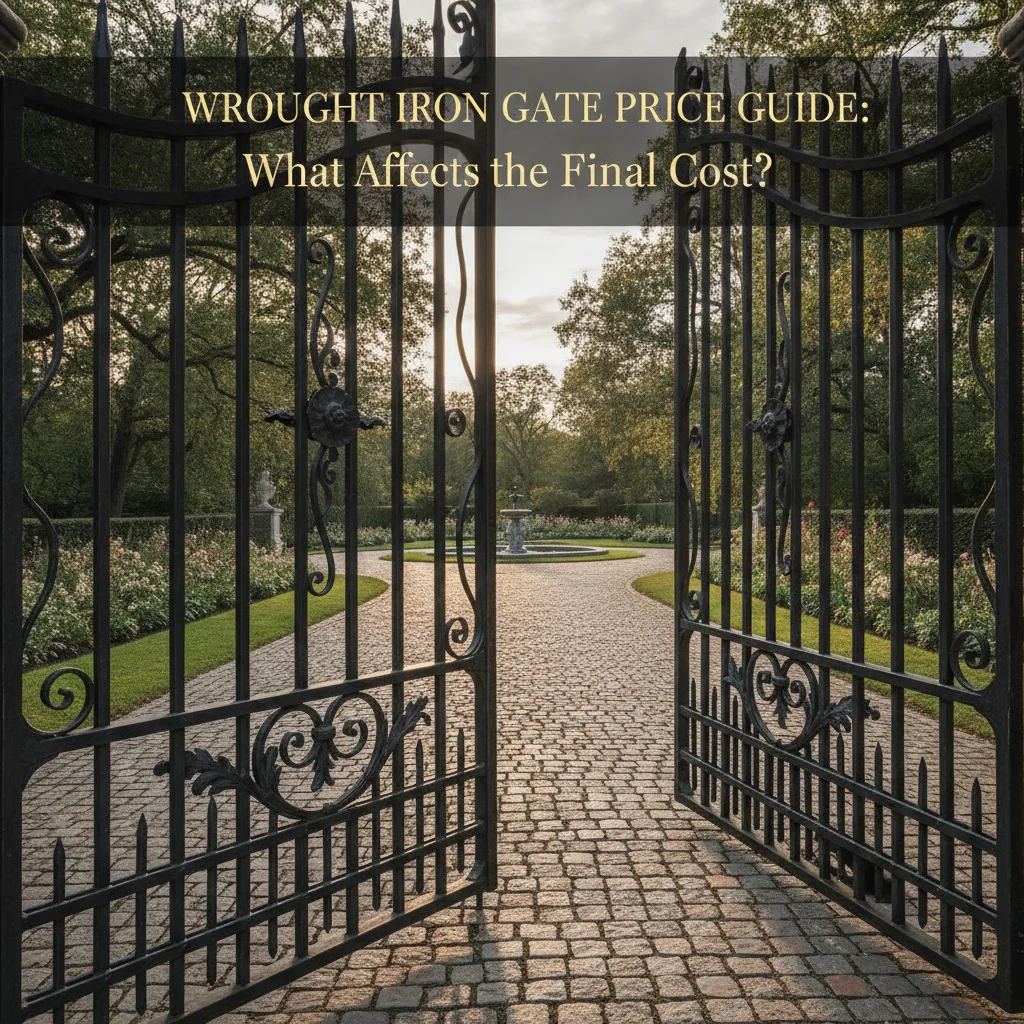
A simple vertical bar gate is the most straightforward pattern to fabricate, and that simplicity is reflected in the price. Scrollwork, curves, spear tops, and custom decorative patterns all add time to the process, since these details are typically shaped and finished by hand rather than produced on an automated line.
A heavily decorative gate can take considerably longer to build than a plain one of the same size, and that extra time is usually the biggest driver behind a higher quote.
Material Quality and Thickness
Not every wrought iron gate is built from the same stock, and the difference matters more than it might seem at first glance.
Heavier gauge steel and thicker frame sections generally cost more upfront, but they also tend to hold their shape better over time. This resists the sagging that can develop in a lighter build. For a gate that will see years of daily use, it is often one of the more worthwhile places to spend a little more.
What ‘Wrought Iron’ Actually Means Today
It is worth clarifying a term that gets used loosely across the industry. Genuine wrought iron, made from nearly pure iron and shaped entirely by hand, is rare and expensive, largely limited to specialist blacksmiths working on heritage restorations.
Almost everything sold as a wrought iron gate today is actually mild steel, formed into traditional wrought iron patterns and finished to match the look. To fully understand this industry standard, you can read our comparison on the difference between wrought iron and steel.
This is not a downgrade so much as an industry standard. It is one reason a supplier quoting a lower price is not automatically cutting corners, since it usually just reflects the material reality of the modern market.
Finish and Rust Protection
Finish is not a cosmetic afterthought that quietly inflates wrought iron gate price. For a gate that lives outdoors permanently, it is closely tied to how long the gate actually lasts.
Galvanising provides a base layer of rust protection, and powder coating adds both colour and a further protective barrier on top. Skipping steps here can lower the initial price, but it often means earlier rust, more frequent touch-ups, and a shorter effective lifespan for the gate.

Automation and Access Control
Gate automation is one of the more flexible parts of the budget, since it can range from a simple remote to a fully integrated smart system. If you are weighing the benefits against the upfront investment, reviewing automated vs manual wrought iron gates in Melbourne can be incredibly helpful.
A few common options tend to come up in most quotes:
- Motors and remote openers, for straightforward open-and-close convenience.
- Intercoms and keypads, for visitors and access control without a remote.
- Sensors, for safety and automatic obstruction detection.
- Smart access features, for app-based or integrated home system control.
Each of these adds its own equipment and installation cost, so it is worth deciding early which features genuinely matter for daily use rather than adding everything by default.
Installation and Site Conditions
The site itself can influence price just as much as the gate does, which is part of why a generic estimate rarely matches a final quote exactly.
Slope, driveway width, the condition of existing posts or pillars, ground preparation, and electrical access all factor into installation. A flat site with straightforward access is generally quicker and more predictable than a sloped block or one requiring new fencing to tie in cleanly.
Customisation and Matching Features
Many homeowners want their new gate to feel like part of a coordinated whole rather than a standalone addition.
Matching a pedestrian gate to a driveway gate, coordinating decorative panels with existing wrought iron fences, or adding a personal touch like house numbers or a family crest all fall under this kind of customisation.
These details are usually a smaller share of the overall cost than size or automation, but are worth mentioning early so they can be planned into the design from the start.
Why a Tailored Quote Matters
With this many variables at play, a generic wrought iron gate price range can only ever be a rough starting point.
A tailored quote takes your gate size, design preferences, material choice, finish, automation needs, and site conditions into account together, rather than estimating each one separately. This is generally the most reliable way to understand what a wrought iron gate price will actually look like for your property.
Frequently Asked Questions
Why do wrought iron gate quotes vary so much between suppliers?
Differences in material thickness, finish quality, design complexity, and how automation is priced all contribute. Two quotes for a similar-looking gate can reflect very different builds underneath.
Is a simple design generally the cheaper option?
Generally, yes. A plain vertical bar gate typically involves less hand-forming time than an ornate design, which usually keeps custom gate pricing lower.
Does finish really affect long-term cost?
It often does. Proper rust protection through galvanising and powder coating can reduce maintenance and extend the gate’s lifespan, which affects value over time even if it adds to the initial price.
What should I compare when reviewing multiple quotes?
Look beyond the total figure. Material thickness, finish process, automation features included, and what site preparation is covered all affect whether quotes are genuinely comparable.
The Bottom Line
A wrought iron gate is a long-term addition to a property, not a purchase to base purely on the lowest number.
Understanding what drives wrought iron gate price, from size and design through to finish and site conditions, makes it far easier to compare quotes with confidence.
The most reliable next step is a tailored quote based on your specific gate and property, rather than relying on a general price range alone.


