

Last Updated on October 5, 2026 by Elegance
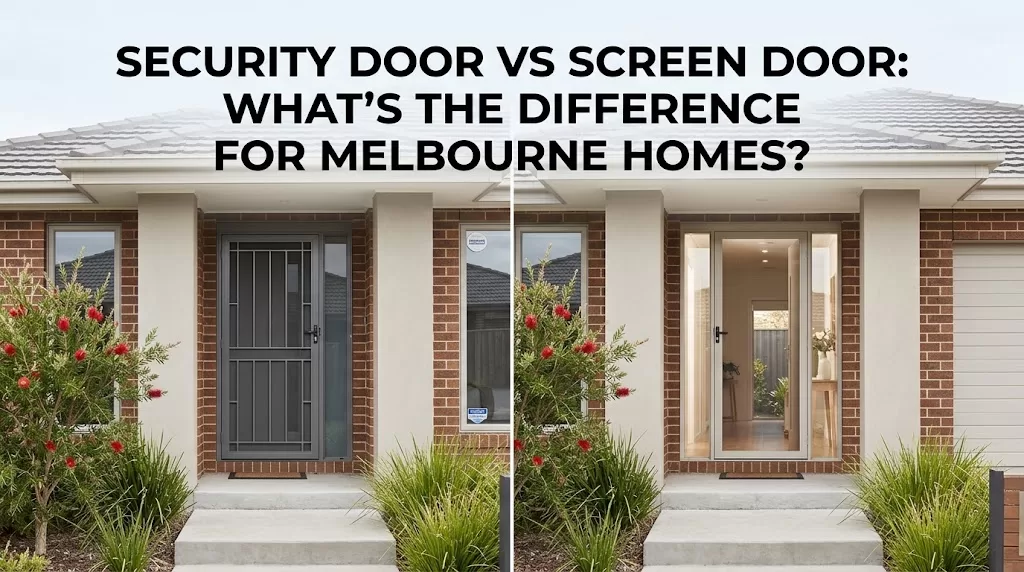
The main security door vs screen door difference is purpose and verified performance. An ordinary screen or flyscreen door is primarily designed for airflow and insect control. A genuine security screen door is designed as a protective barrier and should have evidence supporting the security performance claimed for the product and installation. For the commercial service page, see security doors Melbourne.
Appearance alone cannot tell you which one you are buying. Start with what you need the door to do, then check how the supplier supports any security claim.

Security Door vs Screen Door at a Glance
| Factor | Ordinary screen / flyscreen door | Security door / security screen |
|---|---|---|
| Primary purpose | Airflow and insect control | Protective barrier, with screening where the design permits |
| Security performance | Not its primary purpose | Supported by applicable standards evidence |
| Construction | Designed mainly for screening and everyday use | Frame, infill and hardware form part of the specified security assembly |
| Locks and hinges | Functional screen-door hardware | Must suit the security-screen system |
| Compliance evidence | Security compliance is not its purpose | Check applicable standards evidence and labelling |
| Installation | Must fit and operate correctly | Installation requirements form part of the security specification |
| Best buyer question | Do I mainly need ventilation and insect control? | What evidence supports the security performance being claimed? |
Screen Door vs Security Door: What Are You Actually Buying?
Ordinary Screen and Flyscreen Doors
An ordinary screen door or flyscreen door lets you open the main entry for ventilation while helping keep insects outside.
It may include a latch, lock, grille or relatively substantial frame, but its primary purpose remains screening unless it is specifically supplied with documented security performance.
Security Doors and Security Screens
For homeowners asking what makes a security door different in Australia, the useful distinction is verified performance rather than material alone.
Verified External Source
“A security screen is a specialised physical barrier to entry”
This wording appears in the “What is a security screen?” FAQ on the National Security Screen Association website. In the same answer, NSSA explains that products represented as security screens must pass testing to Australian Standard 5039 and carry compliance labels. Its separate compliance-label guidance also says the label indicates that the door or screen has been manufactured and tested in accordance with AS 5039. That context directly supports this article’s central distinction: appearance, material or the presence of a grille does not by itself establish verified security performance.
Source: National Security Screen Association (NSSA), Frequently Asked Questions. View live source
A security screen door is intended to provide a protective barrier. Its frame, infill, hardware and installation need to correspond with the security performance claimed for the specified product.
Why Product Names Can Be Misleading
Market terminology can be inconsistent, particularly around security, barrier and safety products. A product description alone is not enough to determine its standards status.
| Term | Typical purpose | What the name establishes |
|---|---|---|
| Screen / flyscreen door | Airflow and insect protection | Screening function; not security performance |
| Security screen / security door | Protective barrier with screening functions where applicable | Security status should be supported by applicable standards evidence |
| Barrier / safety terminology | Varies by product | Should not be treated as equivalent to a compliant security screen without supporting evidence |
The practical screen door vs security door question is therefore: what is the exact product, and what documentation supports the way it is being represented?
A Security Door Works as a Complete System
Frame, Mesh, Grille and Infill
Security doors can use different frame, mesh, grille and infill configurations. Decorative ironwork, stainless mesh or another substantial material may form part of a security product, but material choice by itself does not determine compliance.
No individual material, mesh, grille, lock or heavy-looking frame proves that the complete door meets the applicable security-screen requirements. For a broader material comparison, see Which Is the Best Metal for Windows and Doors?.
Elegance in Iron offers custom wrought iron security doors, decorative designs and security-screen options for Melbourne homes. For broader material differences, see wrought iron vs Crimsafe vs aluminium security doors.
Locks, Hinges and Retention
Locks, hinges and the way the infill is retained all contribute to how the door assembly performs.
Rather than judging these parts independently or counting visible locks, ask whether the hardware and retention method belong to the specified security-screen system and support its documented performance.
Testing, Labels and Australian Security Door Standards
The current AS 5039 framework separates product classification and performance, installation and test methods.
| Standard | What it covers | Why the buyer cares |
|---|---|---|
| AS 5039.1:2023 | Classification and performance | Helps define the performance requirements for security screen doors and window grilles |
| AS 5039.2:2024 | Installation | Covers installation requirements for security screen doors and window grilles |
| AS 5039.3:2023 | Methods of test | Sets out the test methods used to assess performance |
For the technical detail behind these Australian security door standards, see Australian Security Door Standards: AS 5039 explained.
Ask to See, Not Just Be Told
If security performance matters, use a simple verification process:
- Identify the exact product or system. Confirm what is actually included in the quote.
- Ask which current AS 5039 requirements support the claim. Avoid relying solely on a product name or sales description.
- Check the compliance label and supporting documentation. Current NSSA consumer guidance makes labelling an important buyer check.
- Confirm the quoted installation applies to that system. Product and installation requirements need to correspond with what is being supplied.
This gives you something concrete to compare between quotes.
Airflow and Insect Protection Do Not Prove Security
What Both Door Types Can Provide
Ordinary screens and many security-screen systems can provide airflow, natural light, visibility and insect protection.
Elegance in Iron’s security-screen options can support airflow and visibility depending on the selected design. Privacy can also vary with the infill and lighting conditions.
What an Ordinary Screen Does Not Establish
An ordinary flyscreen is designed primarily for ventilation and insect control. If resistance to forced entry forms part of your brief, move beyond appearance and ask for the standards evidence attached to the specified security product.
That distinction is particularly useful when two doors look similar from the street but are sold for different purposes.
Installation: The Existing Entrance Matters
Check the Opening and Surrounding Structure
A security screen installation starts with the actual entrance. Dimensions, jamb or frame conditions, available fixing locations and the selected system all affect what can be installed.
The installation should correspond with the requirements applying to the security-screen product being quoted.
Adding a Security Screen to an Existing Entry Door
A security screen can often be fitted in conjunction with an existing main entry door, but the opening needs to be measured first. For broader custom-entry options, see Custom Wrought Iron Doors in Melbourne.
Door dimensions, opening direction, handles and other hardware, clearances and surrounding frame conditions can all affect compatibility.
Corrosion and Weather Exposure
Exposure conditions can affect material, finish and maintenance choices. Tell the supplier about the door’s actual environment—including corrosive or coastal exposure where relevant—and ask what finish and maintenance requirements apply to the proposed product rather than selecting solely by material type. For ongoing care guidance, see How to Maintain a Wrought Iron Door in Melbourne’s Climate.
What Affects Security Door Cost?
Cost can vary with door dimensions and configuration, decorative work, frame and infill system, locking hardware, finish, installation conditions and other project requirements. For detailed pricing context rather than generic ranges here, see wrought iron doors cost Melbourne. For a broader value comparison, see Are Wrought Iron Doors Worth It? Pros, Cons & Value.
Which Door Suits Which Homeowner?
| Homeowner need | What to check |
|---|---|
| Mainly ventilation and insect control | An ordinary screen/flyscreen may meet the brief |
| Security against forced entry is part of the brief | Compare products with documented standards evidence and compliance labelling |
| Want ventilation while the main door is open | Compare suitable security-screen options |
| Existing decorative screen has unknown specifications | Check its label and available documentation |
| Supplier calls it a security door but cannot show applicable evidence | Do not rely on the security description alone |
| Existing main door will remain | Check dimensions, opening direction, hardware and clearances |
| Door faces a demanding exposure environment | Confirm suitable material, finish and maintenance requirements |
Buyer Checklist: What Should the Supplier Show You?

Melbourne homeowners comparing security-screen options can use these questions before accepting a quote:
- What exact product or system is being supplied, and how is it being represented?
- What applicable AS 5039 evidence and compliance label support the security claim?
- What frame, infill, lock, hinge and retention configuration is included?
- Is the existing opening and surrounding frame suitable for the proposed door?
- What does the installation scope include, and who confirms the applicable compliance requirements after installation?
- What finish and maintenance requirements apply to the site’s exposure?
- What written warranty, product information and compliance documentation will be supplied?
The aim is to compare the actual specification rather than choosing from appearance or marketing terminology.
Frequently Asked Questions
What Is the Difference Between a Screen Door and a Security Door?
An ordinary screen door is primarily intended for airflow and insect protection. A security door is intended to provide a protective barrier and should have standards evidence supporting the security performance claimed for the specified product.
Is a Security Screen the Same as a Security Door?
The terms are often used closely in the market, particularly for door-format security screens. Check the exact product designation and documented performance rather than relying on terminology alone.
How Do I Know If a Security Door Is Compliant?
Ask the supplier to identify the applicable current AS 5039 requirements, show the compliance label and provide supporting documentation for the product and installation being quoted.
Does a Security Door Still Let Air Through?
Many security-screen doors are designed to allow airflow while providing a protective barrier. Airflow, light and visibility vary with the selected mesh, grille, infill and overall design.
Is a Flyscreen Door a Security Door?
Not by default. A standard flyscreen door is primarily designed for insect protection and ventilation. If security performance is required, check the documented status of the exact product.
Do Security Doors Need a Compliance Label?
For a product represented as a compliant security screen, the compliance label is an important piece of evidence buyers should check alongside the supporting product documentation.
Can a Security Door Be Installed Over an Existing Entry Door?
Often, yes. The entrance still needs to be measured for dimensions, opening direction, handle clearance, surrounding frame conditions and compatibility with the proposed security-screen system.
Choose the Door by Purpose and Evidence
The central security door vs screen door distinction is not how substantial the door looks. It is what the product is intended to do and what evidence supports the performance being claimed.
If you mainly want ventilation and insect protection, an ordinary screen may meet the brief. If security is part of the requirement, compare the specified product, current standards evidence, compliance labelling and installation scope before comparing appearance or price.
Elegance in Iron designs and creates custom security doors for Melbourne homes, including decorative and security-screen options. A security-door consultation and entrance measure can establish dimensions, design preferences, ventilation needs and the proposed door specification before the final design is confirmed.


