

Last Updated on August 23, 2026 by Elegance
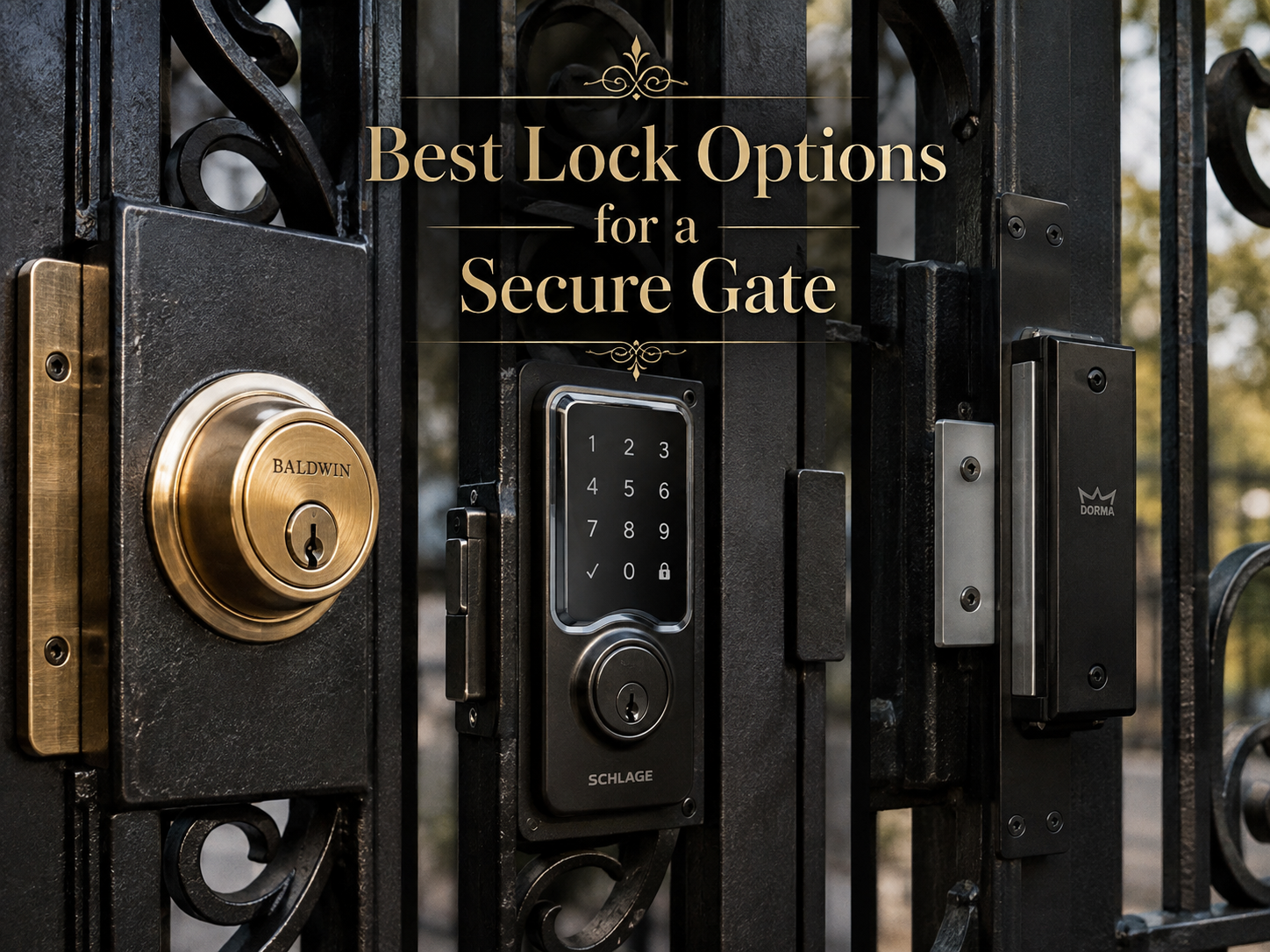
For most manual pedestrian pedestrian gates, a purpose-built keyed gate lock or mechanical keypad lock is a practical starting point. Electric locks suit gates connected to an intercom or access-control system, while a smart gate lock is useful when remote access matters most. There is no single best lock for every gate.
An outdoor gate faces conditions an indoor door never has to deal with: rain, dust, movement, and gaps around the frame an intruder could reach through. The lock also has to suit how the gate is used and who needs access. Security depends on the whole gate system, not the lock alone.
Quick Comparison of Gate Lock Options
| Lock Option | Best Suited To | Main Advantage | Main Limitation |
|---|---|---|---|
| Keyed gate lock | Manual residential gates | Simple and dependable | Keys must be managed |
| Mechanical keypad lock | Family, rental or shared access | Keyless entry without power | Codes must be changed when compromised |
| Electric strike or electric gate lock | Intercom and controlled access | Can release the gate remotely | Needs compatible hardware and professional installation |
| Electromagnetic lock | Selected powered access systems | Convenient electronic control | Depends on power and correct system design |
| Smart gate lock | Remote or managed access | App, code or credential-based entry | Batteries, connectivity and support must be considered |
| Padlock, hasp or drop bolt | Low-use and double driveway gates | Simple supplementary security | Less convenient, may affect appearance |
This is a starting point, not a ranking. None of these options is universally the most secure. The right choice depends on your gate, how it is used, and what it connects to.

What Makes a Gate Lock Secure?
Before comparing lock types, it helps to look at the whole entrance rather than the lock alone. A strong lock cannot make up for a weak frame, a loose post or a gate that will not close properly.
- Strength and stability of the gate frame and posts
- How deeply the latch or bolt engages the strike or keep
- Whether the strike or keep is well positioned and good quality
- Protection against someone reaching through the gate to the latch
- The gap between the gate and the post
- Hinge condition and protection against the gate being lifted off
- Whether the gate is aligned and free of sagging
- Whether the gate reliably closes and latches every time
A latch guard or security shroud can help stop someone reaching or attacking an exposed latch from outside. Victoria Police guidance recommends locking gates and property access points, and self-closing gates and controlled entry for shared residential buildings.
Keyed Gate Locks
Purpose-built keyed locks for metal pedestrian gates come in surface-mounted, bolt-on, mortice and weld-in formats. Some are a simple latch, while others incorporate a deadbolt for stronger security. The lock has to suit your gate frame’s dimensions, not just look right in a catalogue.
Keyed locks are familiar to operate, need no power, and are straightforward to maintain. The trade-off is key management: lost keys, duplicated keys and shared access can become inconvenient over time. Not every indoor door lock can be safely fitted to an outdoor gate, so purpose-built gate hardware is worth insisting on. This option best suits private pedestrian and side gates used by a small number of people.
Mechanical Keypad Locks
A mechanical keypad lock uses a code rather than a key, but it does not necessarily need electricity or batteries to operate. That makes it convenient for family homes, shared gates or service access, without distributing and tracking physical keys.
Keypads come in single-sided and double-sided arrangements, and some include a free-exit handle so people can leave without entering a code. Whoever manages the gate takes on responsibility for the code, including changing it if it may have been shared or observed. Weather resistance and compatibility with your gate frame both need checking. This suits pedestrian gates needing convenient keyless access without app-based technology.
Electric Strikes and Electric Gate Locks
An electric lock releases a gate through an intercom, keypad, swipe card or access-control system. The lock and the device that authorises entry are two separate things working together, not one product.
Electric gate locks need compatible latch hardware, wiring and a power supply, and professional installation matters given the electrical work involved. What happens during a power failure depends on whether the system is fail-safe or fail-secure. Neither is universally correct. The right configuration depends on the specific project and any emergency exit requirements that apply. This option suits pedestrian gates connected to an intercom or access-control system.
Electromagnetic Gate Locks
An electromagnetic lock holds a gate closed using a magnet rather than a mechanical bolt, and is typically one component within a larger powered access system rather than a standalone product. It needs a reliable power supply and correct alignment to work properly.
Integration with intercoms and access-control systems is common, and power-failure and emergency-release behaviour need planning into the design. A high holding-force figure alone does not prove a gate is secure. The gate, mounting, power supply and release controls all need proper assessment too, generally by a qualified access-control professional.
Smart Gate Locks
Smart gate locks may support PINs, apps, cards, fingerprints or temporary access credentials, useful for giving residents, visitors or contractors access without a physical key. The convenience comes with a few things to plan for.
- Battery life and what happens when it runs low
- A manual or mechanical backup entry method
- Genuine outdoor suitability, not just an indoor-rated product
- Ongoing app availability, manufacturer support and firmware updates
- What happens if the internet, phone or battery fails
Check whether the manufacturer publishes the device’s security update and support period, and use unique credentials rather than reused or default passwords, in line with Australian Cyber Security Centre guidance. An IP weather-resistance rating tells you about moisture and dust protection, not resistance to physical or cyber attack. The two should not be confused.
Padlocks, Hasps and Drop Bolts
Traditional hardware still has a place. A padlock and protected hasp can be enough for a low-use gate, and a lockable drop bolt is commonly used to secure the inactive leaf of a double driveway gate.
These options are simple, visible and do not depend on power. The trade-offs are convenience, exposed hardware, and sometimes the visual impact on the gate. An exposed, lightweight hasp can end up being the weakest point in the whole setup, so these are often best treated as supplementary security rather than the complete solution.
Which Lock Is Best for Each Type of Gate?
| Gate Type | What to Prioritise |
|---|---|
| Manual pedestrian gate | A purpose-built keyed lock or mechanical keypad, depending on how many people need access |
| Side or garden gate | Reliable self-latching, weather resistance and protection against reaching through the gate |
| Automated driveway gate | A locking system compatible with the motor, not a manual lock that could stay engaged when it activates |
| Shared residential gate | Manageable credentials, self-closing operation and the ability to change access when occupants change |
| Pool or spa gate | Compliant self-closing, self-latching pool-barrier hardware, not an ordinary security lock alone |
“have self-latching and self-closing gates”
This is from the Victorian Government’s official guidance on pool safety barriers, published by the Building and Plumbing Commission (formerly the Victorian Building Authority). Under the Building Regulations 2018, this requirement — along with compliance with Australian Standard AS1926.1-2012 — applies to any swimming pool or spa capable of holding more than 30cm of water, and property owners are responsible for keeping their pool barrier maintained and working at all times. It’s the regulatory backbone behind why the “Pool or spa gate” row above specifically calls for compliant barrier hardware rather than an ordinary security lock, however good that lock might otherwise be.— Victorian Government, Building and Plumbing Commission, “Pool safety barriers”
Questions to Ask Before Choosing a Gate Lock
- Is the gate manual or automated?
- Is it a pedestrian, side or driveway gate?
- What material and frame dimensions does it have?
- Is entry needed from one side or both?
- Should people be able to exit without a key or code?
- Is power available at the gate?
- Is intercom or remote access required?
- Is there a backup entry method?
- How exposed is the gate to rain or coastal conditions?
- Are there pool, emergency-exit or building requirements to check?

Common Gate Lock Mistakes
- Fitting an indoor door lock to an exposed outdoor gate
- Choosing a lock before measuring the gate frame and gap
- Ignoring gate sag or poor alignment
- Leaving the latch reachable through decorative openings
- Focusing on the lock while weak hinges or posts go unaddressed
- Installing electronic access without a power-failure plan
- Forgetting to change a shared keypad code
- Treating a pool gate like an ordinary garden gate
Final Recommendation
Keyed locks suit straightforward private access. Mechanical keypads suit convenient keyless entry without power. Electric locks suit intercom and controlled-access systems. Smart locks suit remote access, provided power, support and cybersecurity are genuinely considered. An automated driveway gate needs an integrated solution rather than a bolt-on extra.
Every option ultimately depends on correct fitting, alignment and a gate built to support it, which is why it pays to have your gate and access requirements assessed before choosing hardware. Elegance in Iron builds custom wrought iron gates with manual or remote-controlled options, and can talk through what suits your gate frame and security needs as part of that conversation. Accurate site measurements are the starting point — see our guide on wrought iron gate measurements, or our roundup of security gate design ideas for modern homes.
Frequently Asked Questions
What is the most secure type of lock for a metal gate?
There is no single most secure option. The right lock depends on the gate’s construction, how it is used, and how well the whole entrance, not just the lock, is put together.
Are keypad gate locks secure?
Mechanical keypads can be secure and convenient for family or shared access, provided the code is changed when it may have been shared, and the unit suits the gate frame and outdoor conditions.
Can a smart lock be installed on an outdoor gate?
Yes, provided the product is genuinely rated for outdoor use, has a reliable backup entry method, and the manufacturer supports it with ongoing updates.
Does an automated driveway gate need a separate lock?
Not always, and adding one without care can be risky. Any locking hardware must be compatible with the motor system, since a manual lock left engaged could damage the gate when the motor activates.
What happens to an electric gate lock during a power outage?
It depends on whether the system is fail-safe or fail-secure, which affects whether the gate unlocks or stays locked when power is lost. The correct configuration is project-specific.
Can I use a normal door lock on a metal gate?
Generally, no. Indoor door locks are not built for outdoor exposure or the way gates move, so a purpose-built gate lock suited to the frame is the safer choice.
What type of lock is suitable for a double driveway gate?
A lockable drop bolt on the inactive leaf, often paired with a keyed lock or padlock on the active leaf, is a common approach, whether the gate is manual or automated.
Can any secure lock be used on a pool gate?
No. A pool or spa gate has to meet self-closing and self-latching pool-barrier requirements under Victorian regulations, and an ordinary security lock does not substitute for compliant barrier hardware. Getting the gate itself right from the outset matters too — see our Melbourne wrought iron gate cost guide and beginner’s guide to custom wrought iron products.


